- Home Page
- 8 Insurance Selling Tips
- Selling during a recession or inflation
The
Recession is
Natural
Now Get Busy!
Every article on this website is like a mini-training school. use the nav bars on either side of this page to locate your area of interest or subject you need help with.
Insurance and the recession. Here is some food for thought.
This article compliments of guest author Bob Davies.
Have you been touched by this marketplace?
What
a recession! Are your
insurance sales down or up?
Perhaps your portfolio is down by 40%. Perhaps you are the owner of a
company
and for the first time ever you may have to consider layoffs. Maybe
you’ve lost
your biggest client and the large chunk of revenue that came with them.
Perhaps your
home has lost half of its value.
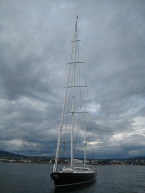
Sailing through life is not easy. It’s easy to blame the economy or your clients, or your stockholders. However, I’m going to ask you to consider that something else is at play here.
2009 marks 200 years since the birth of Charles Darwin and 150 years since the publication of his masterpiece, “On the Origin of Species”. Darwin’s theory of evolution by natural selection was the first intellectual revolution.
Today you can’t open a newspaper without a conversation of Darwinian thinking. It shows up in conversations about drug resistant bacteria in hospitals. It shows up with kin selection in the Middle East and the various conflicts.
Survival of the fittest has helped us to understand not only biological adaptations but also politics and even our universe. The main concept of Darwinian thinking is that organisms best suited to their circumstances [marketplace] will be the ones most likely to reproduce [be profitable], spreading their adaptive traits and driving out the competition. Natural selection creates a dynamic ever changing environment, driven to evolve by genetic variation, adaptation to different environments and competition for limited resources.
This same thinking describes the rise in complexity of inanimate systems such as the stock markets. Darwin’s approach shows that certain complex systems not only arise but also adapt over time to the constraints imposed by the environment, as living systems do.
What are the unexpected changes going on in the stock market? How about the unemployment rate? Are these changes a natural part of a system? Do you need to “evolve” to survive? Could this be a natural way of cleansing and pruning out the weak? Is this natural selection in business?Maybe this recession is the best event that could happen to us
It forces the weak to declare themselves and the strong to reinvent their purpose, the business version of survival of the fittest.
If you are having a difficult time it just could be that your product or service is not of value to the masses. That means that you need to mutate. Or, it could mean that there is business out there but you need to adapt your behavioral approach to getting it. We live in a world of forces, pushes and pulls. The recession is a “pull” that is pulling people off track and away from their goals. An adjustment is needed. Not complaining and looking to the government for a handout, but evolving, adapting and becoming more relevant to solving today’s problems. You need to find your true value, your true contribution to the planet to be successful and then go and put forth enough energy to cause the results you seek to happen.
Nobel laureate Gerald Edelman, director of the Neurosciences Institute in San Diego, used evolutionary theory to explain how the immune system rapidly creates antibodies targeted to pathogens it has never seen. Using a kind of natural selection when challenged by a toxin the immune system screens the population for a cell line that produces a matching antibody. The immune system chooses the cell line that is highly equipped to deal with the environmental challenge.
Today’s marketplace is unlike any that history has ever seen. You as a business and individual are being challenged to adjust your products, your attitude and your efforts.

Survival of the fittest is all about the organisms that had slight variations that were favorable to living passed on those genes. Slowly over time massive changes occurred. A single gene that changes the way it is expressed and the protein that it codes for can make a significant difference in the overall organisms’ chance for survival.
What small change do you need to make to give your business the highest probability for predictable success? You can’t just stay the same and expect to succeed in an ever changing environment. You must evolve. You must adapt your product, service and intensity levels and that doesn’t include going victim and blaming the economy.
At the age of 22 Charles Darwin sailed from England to the Galapagos Islands. He went from island to island collecting birds. He realized that even when the birds appeared to be similar on each island they were slightly different. They started out as a single species but over time and with separation they had changed.
Evolution works in increments. If evolving spots on wings makes you more attractive to mates or more evasive to predators, those patterns will dominate. Those varieties will have more offspring. Added up over centuries and longer periods of time, natural selection, the competition that takes place in nature between variant forms, is powerful enough to create all of the changes and varieties that you see on our planet.
The ability to participate in genetic research has opened our eyes to how linked everything on the planet really is. DNA studies show we all share a common female ancestor who lived in Africa about 140,000 years ago. In addition, all living men share a common male ancestor who lived in Africa about 60,000 years ago.
In
1983 Matt Scott, University of Colorado and Sean Carroll,
Tufts School of Medicine, discovered that there was a relationship
between
human eyes and the eyes of a fruit fly. For years it was thought that
eyes
evolved independently until their research showed that there is a
common gene,
even though the two species have evolved separately for 500 million
years.
Their team showed that the same common gene is critical to building
limbs in
humans and fruit flies. These findings shattered beliefs and forced
people to
think differently. Beneath these extremely diverse life forms was a
deeply
shared common genetic foundation.
Organisms
[and markets] are in a constant state of change
and evolution.

You are either growing or decaying, there is no middle ground. Organisms [and businesses] are reinventing themselves in reaction to the demands of their environment or dying. For example, land contaminated by runoff from industrial waste may soon be reclaimed by metal eating earthworms. These worms have evolved to thrive in highly polluted environment. Mark Hodson, a soil scientist at the University of Reading in England first discovered them. There was a subtle change in the worms’ genetic makeup that was induced by the metal. When they ingest the metal the metal accumulates in their tissues. However, they have modified calcium pathways and secrete an enzyme that converts the metal into a less toxic form. Not only have the worms adapted to survive in a toxic environment, but their adaptation [product] is beneficial to the planet.
Over the past 10,000 years human evolution has occurred a hundred times more quickly than in any other period of our species history. These mutations relate to our brain, the digestive system, life span, and immunity to pathogens, sperm production and bones, virtually every aspect of our functioning.
We aren’t the same people that we were 10,000 years ago. Our skulls are shrinking, teeth are getting smaller and overall stature is shrinking. In a large population you don’t have to wait so long for the rare mutation that boosts brain function or does something else desirable to be passed on and dominate. Ten thousand years ago there were 10 million people on earth. That number soared to 200 million by the Roman Empire. Since 1500 the global population has been rising exponentially now surpassing 6.7 billion. Evolution happens quickly as populations surge.
So now it’s time for you to evolve or become extinct. You need a mindset that goes from “opportunity is nowhere” to “opportunity is now here”. It’s the same word, but a different observation. In many cases simply getting back to the basics and executing the activities that you should be doing is the necessary adaptation.
Recently I was approached by a construction worker who was walking my neighborhood asking the homeowners if they wanted to save money on electricity by upgrading their windows. I’ve never seen this type of prospecting before. Is this evolution? Is this the company adapting to the environment? Shouldn’t they have been doing this all along?
There is a solution to this economy. Get busy! If you want to be busy then get busy. Precisely plan and then execute with intensity and purpose and you will prosper regardless of the marketplace!
Small subtle differences create large impacts.

We know that the human genome and the chimp genome differ by only about 1%. Yet our bodies and brains are so different. The quantum laws of the small produce large impacts.
Every species contains fossil genes. There are remnants that are no longer used. Carroll tells about the ice fish of Bouvet Island. There creatures live in the cold waters of the Antarctic. They are the only vertebrates without red blood cells to carry oxygen to nourish their tissues. If you look at the genes for hemoglobin, the oxygen carrying proteins in red blood, one of those genes is completely gone and another is barely present. The ice fish are living in this extremely cold water and it may well be that red blood cells are hard to pump around capillaries in such extreme cold. Without adapting these fish will not survive. They are no longer relevant to the conditions.
Instead, the fish have larger gills and a scale less skin. They are getting their oxygen passively from the surrounding ocean water. They’ve changed from a design that has nourished vertebrates for 500 million years.
Organisms [and markets] are in a constant state of change and evolution.
You are either growing or decaying, there is no middle ground. Organisms [and businesses] are reinventing themselves in reaction to the demands of their environment or dying. For example, land contaminated by runoff from industrial waste may soon be reclaimed by metal eating earthworms. These worms have evolved to thrive in highly polluted environment. Mark Hodson, a soil scientist at the University of Reading in England first discovered them. There was a subtle change in the worms’ genetic makeup that was induced by the metal. When they ingest the metal the metal accumulates in their tissues. However, they have modified calcium pathways and secrete an enzyme that converts the metal into a less toxic form. Not only have the worms adapted to survive in a toxic environment, but their adaptation [product] is beneficial to the planet.
Over the past 10,000 years human evolution has occurred a hundred times more quickly than in any other period of our species history. These mutations relate to our brain, the digestive system, life span, and immunity to pathogens, sperm production and bones, virtually every aspect of our functioning.
We aren’t the same people that we were 10,000 years ago. Our skulls are shrinking, teeth are getting smaller and overall stature is shrinking. In a large population you don’t have to wait so long for the rare mutation that boosts brain function or does something else desirable to be passed on and dominate. Ten thousand years ago there were 10 million people on earth. That number soared to 200 million by the Roman Empire. Since 1500 the global population has been rising exponentially now surpassing 6.7 billion. Evolution happens quickly as populations surge.
So now it’s time for you to evolve or become extinct. You need a mindset that goes from “opportunity is nowhere” to “opportunity is now here”. It’s the same word, but a different observation. In many cases simply getting back to the basics and executing the activities that you should be doing is the necessary adaptation.
Recently I was approached by a construction worker who was walking my neighborhood asking the homeowners if they wanted to save money on electricity by upgrading their windows. I’ve never seen this type of prospecting before. Is this evolution? Is this the company adapting to the environment? Shouldn’t they have been doing this all along?
There is a solution to this economy. Get busy! If you want to be busy then get busy. Precisely plan and then execute with intensity and purpose and you will prosper regardless of the marketplace!
High Performance Training, Inc.
Bob Davies, M.Ed. Psychology, B.S. Health, MCC Master Certified Coach
20992 Ashley Lane, Lake Forest, CA 92630-5865
Bob Davies, named in the top 100 greatest minds of personal development world-wide by Excellence Magazine.
Permission granted to publish this article with *Resource information included: Bob Davies High Performance Training, Inc. 949-830-9192 Permission also granted to edit this article.
For more coaching help and information check out *Bob's
(5) free
coaching videos, or go to *Bob Davies Coaching page.
| Monthly Newsletter Free Please add me to your e-mail list so I can receive all new updates on selling and recruiting. See all back issues |
| Insurance Forum Get answers |
Total Hits On Our Website
Follow Us
|
Our most popular Self Help e-books Exclusive to our readers |
Looking for proven and tested recruiting concepts. View our Agency Building Manual. |
| More free resources and helpful selling tools |